CAPE crossed 30 in 1997 and peaked in 2000
August 2, 2026
People say a high CAPE is a poor timing tool, and then use it as one anyway. The late 1990s are the cleanest illustration of why that doesn't work.
Shiller CAPE moved through 30 during 1997. It sat in the 30s. It kept sitting there. It didn't reach 44 until December 1999.
Anyone who read that first 30× print as a sell signal spent three years watching the index climb without them. They were right about the valuation and wrong about everything that paid, which is a distinction worth internalizing before acting on any reading here.
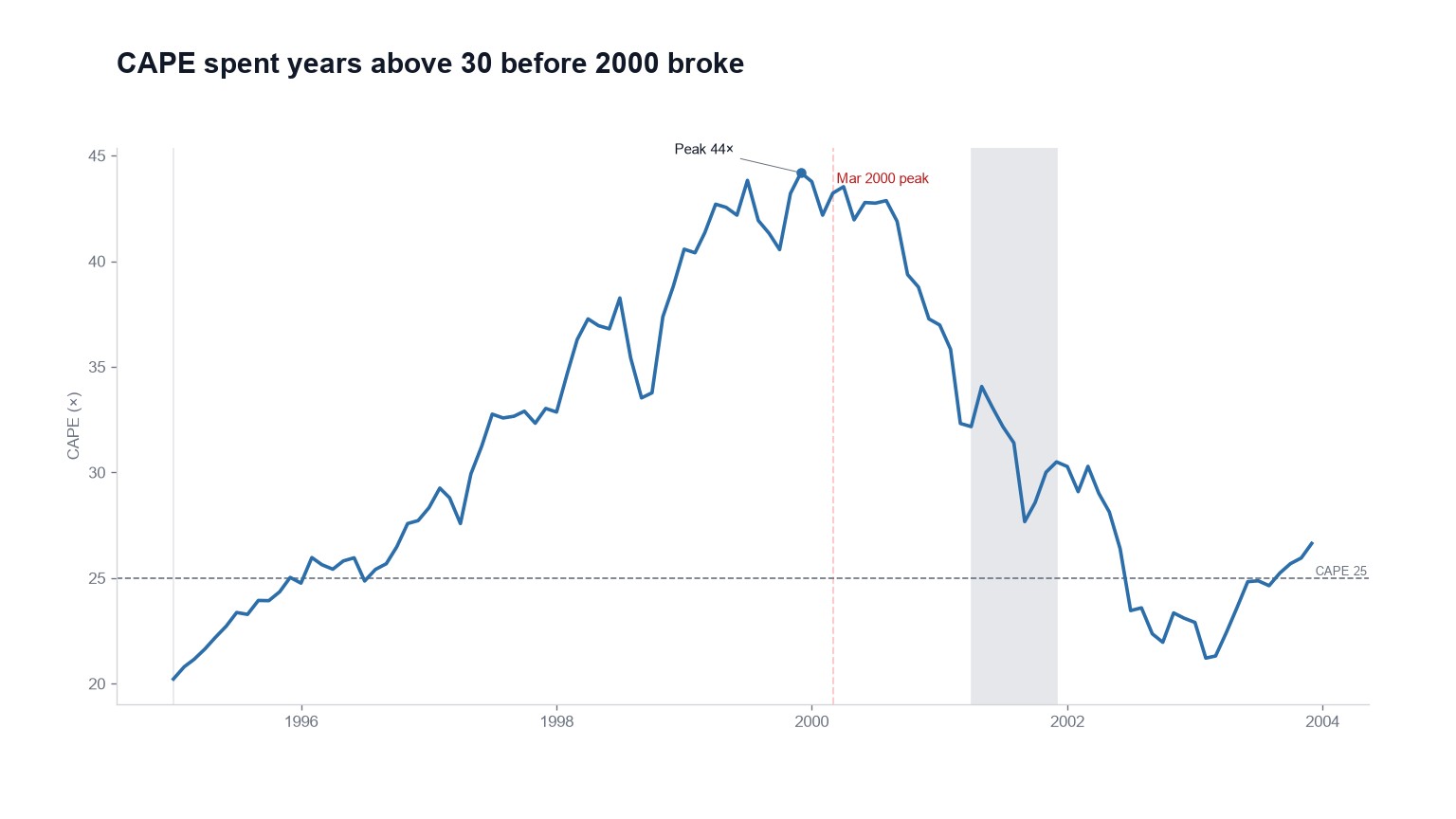
What those years eventually cost
There's a second half to this story, and the people who quote the first half tend to leave it out.
The investors who bought in 1997 still owned an expensive market in 1998 and again in 1999. The ten-year real returns measured from each of those starting points landed among the weakest in our forward-return table. Very High composite months produced a median of −0.7% a year in real terms over the following decade.
That didn't happen because the Tuesday after the first 30× print brought a crash. It happened because a high price for future earnings is a high price whenever you pay it, and the arithmetic eventually shows up in the returns.
The clock runs in years. It just never tells you which year, and this is why the disclaimer on this site isn't decoration. Nothing here is a recommendation to sell the index tomorrow. High readings have been followed by below-average ten-year returns, and markets have stayed expensive for a long time first. Both statements are true and neither cancels the other.
Where 2026 sits
CAPE has now been in the 30s and 40s long enough that we look later than 1997 without yet running a 2000 script.
Households are further committed than they were then. Buffett is higher. The wealth effect is supporting consumption much the way it did in 1999, right up until the year it stopped. None of that is a date either.
CAPE is 42.17× today. It could go to 50 or fall to 25, and both have precedents. What the composite says is that you're paying a high price either way, and the bill arrives on its own schedule.