A good job market doesn't make stocks cheap
August 24, 2026
Unemployment was 4.1% in July 2026, which is not a crisis number by any reading. It's why the Sahm Rule sits at 0, and it's the foundation of an argument we hear constantly: the consumer is fine, the job market is fine, so the stock market must be fine.
The argument breaks at the second comma. Jobs are a cycle variable. Price measured against earnings, sales, output and replacement cost are valuation variables. Running them together is how somebody talks themselves out of a 42× CAPE using an unemployment rate.
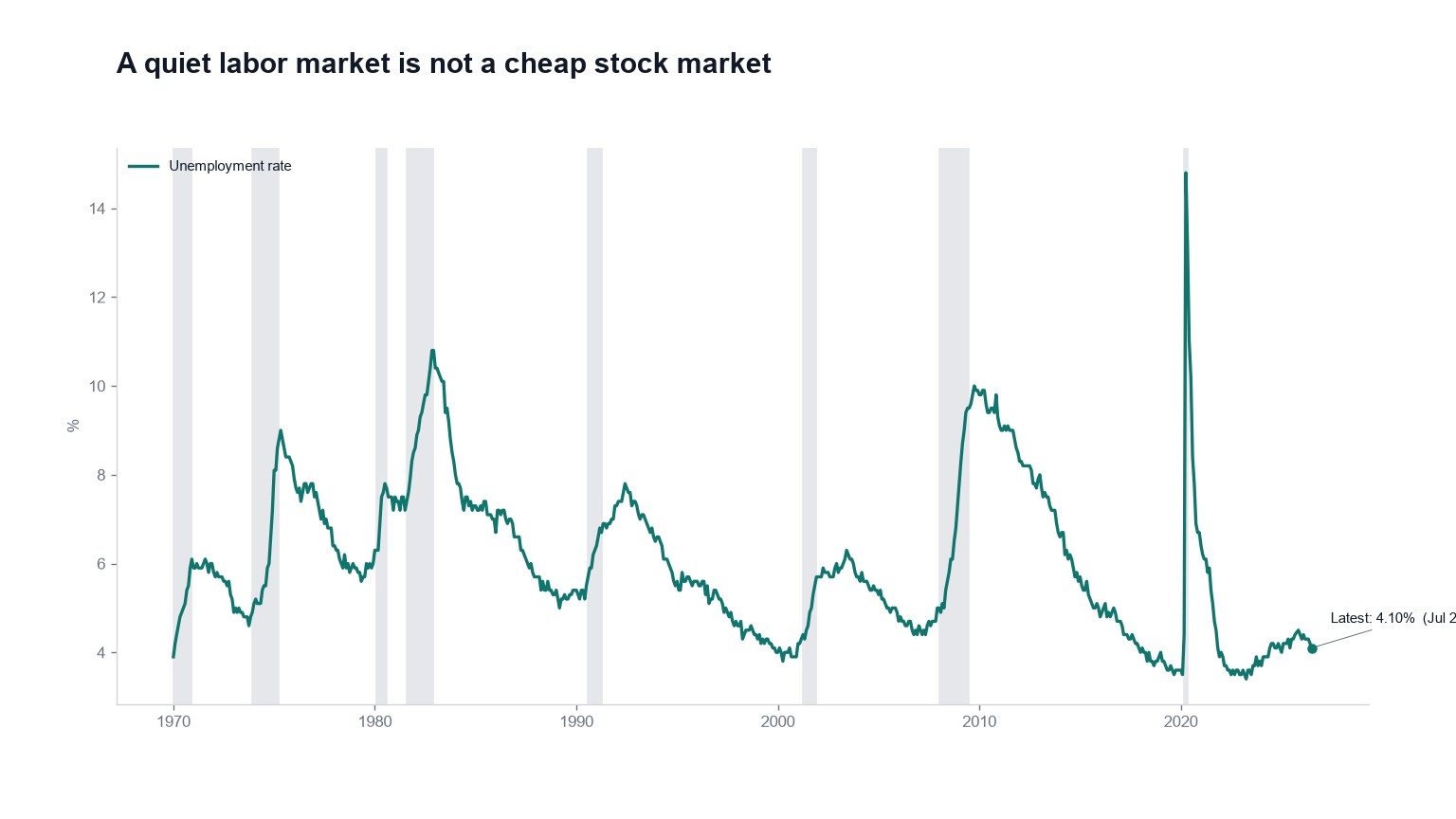
Two thermometers in different rooms
Recessions appear on this chart as spikes. Bear markets sometimes line up with those spikes and sometimes don't, 1987 being the example everyone reaches for.
The history runs in both directions. In 1999 unemployment was low and CAPE was 44×. In 2009 unemployment was high and stocks were considerably cheaper. Expansions with strong labor markets have hosted cheap markets and wildly expensive ones, which is exactly what you'd expect from two measurements that aren't linked.
Here's the test we'd apply to any framework, including our own. If yours requires a 6% unemployment rate before it will concede that prices are high, it isn't a valuation framework. It's a recession framework wearing a costume, and it will tell you stocks are reasonable right up until the economy turns, at which point the information arrives too late to use.
That's the same split we make on the homepage: ten price and positioning gauges vote, while the yield curves and Sahm do not. The wealth-effect note covers the neighbouring confusion, where spending holds up because equity wealth rose at the top even as most paychecks went nowhere.
What 4.1% is actually good for
Cycle context, which is genuinely worth having.
A sudden rise in unemployment would matter a great deal, for Sahm, for junk spreads, and for the odds of an earnings recession. We'd be watching it closely and we'd say what it changed.
What it would not do is retroactively turn 214% of GDP into a normal market capitalisation. Watch the labor series for what it measures, and watch CAPE for what it measures.